The boundary between science fiction and domestic reality is dissolving at an unprecedented pace. For decades, the concept of a humanoid robot—a machine designed to mimic the human form and perform our daily chores—was relegated to the silver screen and high-budget research laboratories. However, we are currently witnessing a historic pivot. Driven by breakthroughs in artificial intelligence, battery density, and advanced actuators, humanoid robots are no longer just experimental prototypes; they are preparing to enter our homes.
This transition from the factory floor to the living room represents the next great frontier of the digital age. Just as the personal computer revolutionized the 20th century and the smartphone redefined the early 21st, the domestic humanoid robot is poised to become the ultimate consumer interface. This isn’t merely about automated vacuuming; it is about a versatile, general-purpose assistant capable of navigating human environments, manipulating objects with dexterity, and providing companionship and care.
In this comprehensive analysis, we will explore the technological engines driving this revolution, the key industry players racing to build the first “iPhone of robots,” the practical applications that will define their utility, and the profound societal shifts that will follow their arrival. Welcome to the era of the mechanical housemate.
The Convergence of Technologies: Why Now?
The dream of domestic robotics has existed for a century, but only recently have the necessary “building blocks” aligned to make a humanoid form factor viable for the average consumer.
A. Generative AI and Large Behavior Models (LBMs): The most significant hurdle for robots has always been “intelligence”—the ability to understand an unstructured environment. Traditional programming couldn’t account for every possible obstacle in a messy kitchen. Today, Large Language Models (LLMs) and the emerging field of Large Behavior Models allow robots to understand natural language commands and translate them into physical actions through “end-to-end” learning. Instead of being programmed to “move arm 10 degrees,” they are trained to “pick up the mug,” learning through observation and simulation.
B. Advancements in Actuation and Sensing: A humanoid robot must be both strong and delicate. New electric actuators provide the torque necessary for lifting heavy groceries, while high-resolution tactile sensors allow the robot to handle a fragile egg without breaking it. Sophisticated Computer Vision (CV) systems, often utilizing LiDAR and depth cameras, enable these machines to map a home in 3D, recognizing the difference between a sleeping dog and a stray rug.
C. Energy Density and Efficient Power Management: A robot that needs to be plugged in every 30 minutes is a liability. Improvements in lithium-ion and solid-state battery technology now allow for several hours of continuous operation, enough to perform a series of household tasks before autonomously returning to a charging station.
The Domestic Workforce: How Humanoids Will Change Daily Life
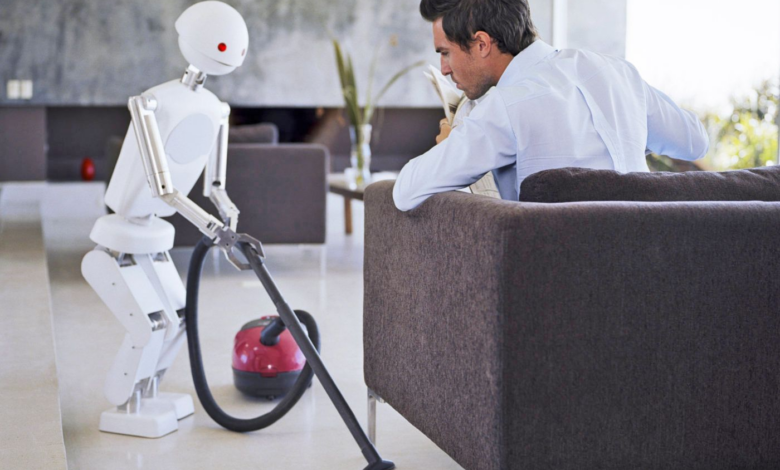
The primary value proposition of a humanoid robot is its “general-purpose” nature. Unlike a dishwasher that only cleans plates, a humanoid can potentially do anything a human can.
A. Household Maintenance and Labor: The most obvious application is the elimination of “drudgery.”
- Laundry Management: Sorting, washing, drying, folding, and putting away clothes—a task that remains highly manual—is a prime candidate for robotic automation.
- Cleaning and Organization: Beyond sweeping, humanoids can declutter, wipe surfaces, load dishwashers, and organize pantries by recognizing objects and their proper places.
- Meal Preparation: While we have “smart ovens,” a humanoid can act as a sous-chef, chopping vegetables, stirring pots, and even plating meals based on downloaded recipes.
B. Elderly Care and Accessibility: As global populations age, the demand for caregiving is outstripping the supply of human workers.
- Mobility Assistance: Robots can provide physical support for those with limited mobility, helping them navigate their homes or move from a bed to a chair.
- Health Monitoring: Equipped with sensors, these robots can monitor vital signs, detect falls, and ensure that medication is taken on schedule, providing peace of mind for families.
- Cognitive Support: For those with dementia, a robot can offer reminders, answer repetitive questions with infinite patience, and facilitate video calls with loved ones.
C. Educational and Professional Support: The home robot will also serve as a mobile hub for learning and productivity.
- Personalized Tutoring: Imagine a robot that can help a child with chemistry homework or practice a new language through interactive conversation.
- Remote Presence: For those working remotely, a humanoid robot can serve as a “telepresence” avatar, allowing a person to “be” in their home or office from across the world, interacting with the physical environment.
The Key Players: The Race to the Living Room
The competition to dominate the domestic humanoid market is a multi-billion dollar race involving tech giants and agile startups.
A. Tesla (Optimus/Bumblebee): Elon Musk has positioned the Tesla Bot as potentially more significant than the company’s automotive business. By leveraging Tesla’s existing AI expertise in “Full Self-Driving” (FSD) and its massive manufacturing capabilities, Tesla aims to produce a robot at a price point comparable to a car (approx. $20,000 to $30,000).
B. Figure AI: Backed by industry heavyweights like Microsoft, NVIDIA, and OpenAI, Figure is focusing on “useful” AI. Their Figure 01 model has already demonstrated the ability to learn tasks like making coffee simply by watching human videos. Their goal is a commercially viable general-purpose humanoid.
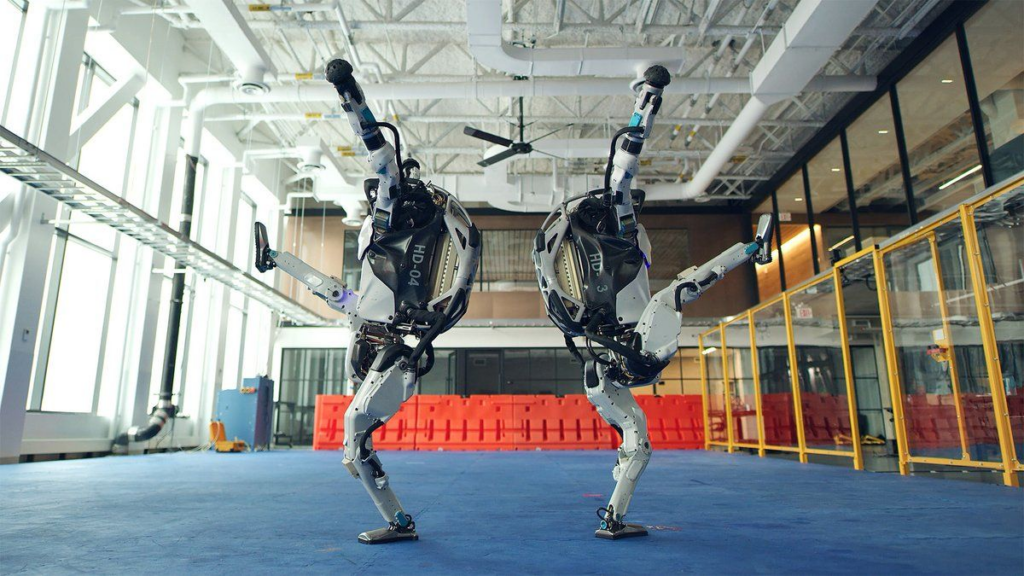
C. Boston Dynamics (Atlas): Long the leader in robotic mobility, Boston Dynamics recently unveiled an all-electric version of its famous Atlas robot. While historically focused on research and industrial applications, their move to electric actuators signals a push toward more quiet, reliable, and eventually consumer-ready platforms.
D. Apptronik (Apollo): This NASA-partnered startup is building robots designed to work alongside humans. Apollo is modular and emphasizes “friendly” design, a crucial factor for a machine that will live in a family home.
Ethical and Societal Considerations
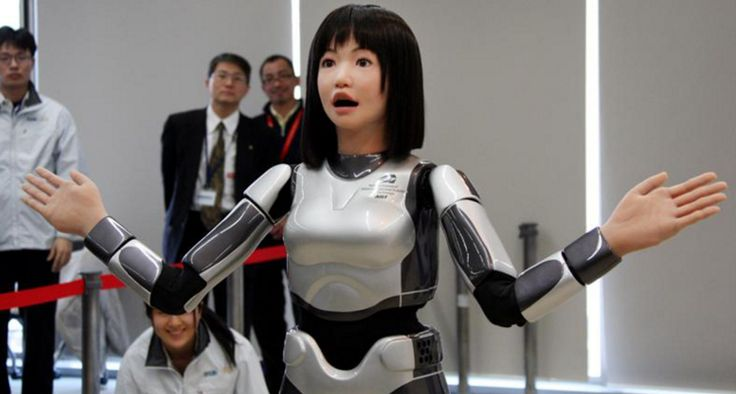
The introduction of autonomous, human-shaped machines into the private sanctuary of the home brings significant challenges that society must address.
A. Privacy and Data Security: A domestic humanoid is essentially a walking array of cameras and microphones. How is that data stored? Can it be hacked? The “Privacy of the Home” will need new legal definitions when a third-party AI is constantly recording the intimate details of our lives.
B. The “Uncanny Valley” and Psychological Impact: As robots look and act more like us, we risk falling into the “Uncanny Valley”—a sense of revulsion toward things that are nearly, but not quite, human. Furthermore, how will growing up with a robotic servant affect the social development of children? Will we lose the “human touch” in caregiving?
C. Economic Disruption: While these robots will first enter high-income homes, their eventual mass adoption will disrupt the labor market, particularly for domestic workers, cleaners, and home health aides. A proactive strategy for workforce transition will be necessary.
Preparing for the Arrival: The Economic Opportunity
For investors and entrepreneurs, the “Humanoid Home” is an untapped goldmine. The ecosystem surrounding these machines will be massive.
A. The App Store for Robots: Much like the iPhone, the hardware is only half the story. There will be a desperate need for “skills” or apps—software packages that teach a robot how to garden, how to groom a pet, or how to perform specialized physical therapy.
B. Maintenance and Infrastructure: Homes may need to be “retrofitted” for robots. This includes standardized charging ports, robot-friendly flooring, and “smart home” integrations that allow the robot to talk to the fridge and the front door lock.
A New Chapter in Human History
The arrival of humanoid robots in the home is not just a technological upgrade; it is a shift in the human experience. By offloading the repetitive and physically taxing tasks of daily life to machines, we unlock a “Time Wealth” that humanity has never truly possessed. What we choose to do with that time—whether we invest it in creativity, community, or rest—will define the next chapter of our civilization.
The transition will be gradual, starting with niche applications and expensive early-adopter models. But the trajectory is clear. Within our lifetime, the sight of a humanoid robot helping with the groceries or playing a game with a child will be as unremarkable as seeing a car on the street or a computer on a desk. The future is walking toward us, and it’s time to prepare our homes for its arrival.