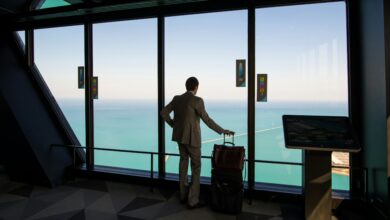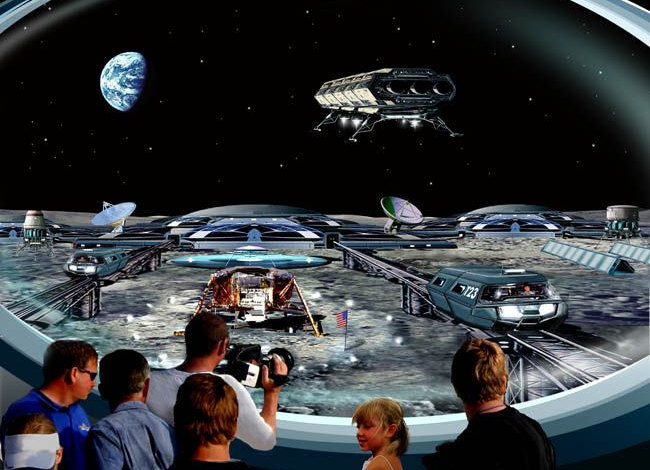
The human desire to explore has always been our most defining trait. From the first brave souls who crossed vast oceans to the pioneers who scaled the highest peaks, our history is a map of expanding horizons. However, we are currently witnessing a transition that dwarfs any previous era of exploration. We are standing at the threshold of the “Orbital Age.” For decades, space was the exclusive playground of superpowers and highly trained government astronauts. Today, the stars are being privatized. Space tourism has officially arrived, shifting from a billionaire’s fever dream into a tangible, albeit high-priced, luxury travel category.
This is not merely about a “vacation” in the traditional sense. It is the commodification of the ultimate human experience: the “Overview Effect.” This cognitive shift, reported by almost every astronaut who has looked back at Earth from the void, involves a profound realization of our planet’s fragility and the unity of the human race. As private aerospace companies like SpaceX, Blue Origin, and Virgin Galactic refine their technology, the question is no longer if you can go to space, but when and how you will choose to experience it.
In this exhaustive guide, we will analyze the current state of the space tourism industry, the technology driving this cosmic gold rush, the different tiers of “off-world” travel, and the immense logistical and ethical challenges that come with vacationing among the stars. Whether it is a suborbital hop or a stay at a luxury space hotel, the new luxury travel segment is looking up—literally.
The Architecture of the Cosmos: How We Get There
To understand the luxury of space, one must first understand the physics of the journey. Not all space travel is created equal. Currently, the industry is divided into three distinct categories, each offering a different level of prestige, price, and physical demand.
A. Suborbital Joyrides: This is the current “entry-level” for the ultra-wealthy. Companies like Blue Origin and Virgin Galactic specialize in this. A suborbital flight involves a rocket or spaceplane reaching the Kármán line—the internationally recognized boundary of space at 100 kilometers (62 miles) above sea level. Passengers experience approximately three to five minutes of weightlessness and witness the curvature of the Earth against the blackness of space before descending back to terra firma.
B. Orbital Expeditions: This is a significantly more complex and expensive undertaking. Orbital travel requires reaching “orbital velocity,” which is approximately 17,500 miles per hour. This allows a spacecraft to stay in space and circle the Earth. SpaceX’s Crew Dragon is the leader here, having already taken private citizens to the International Space Station (ISS). These missions last days or weeks rather than minutes.
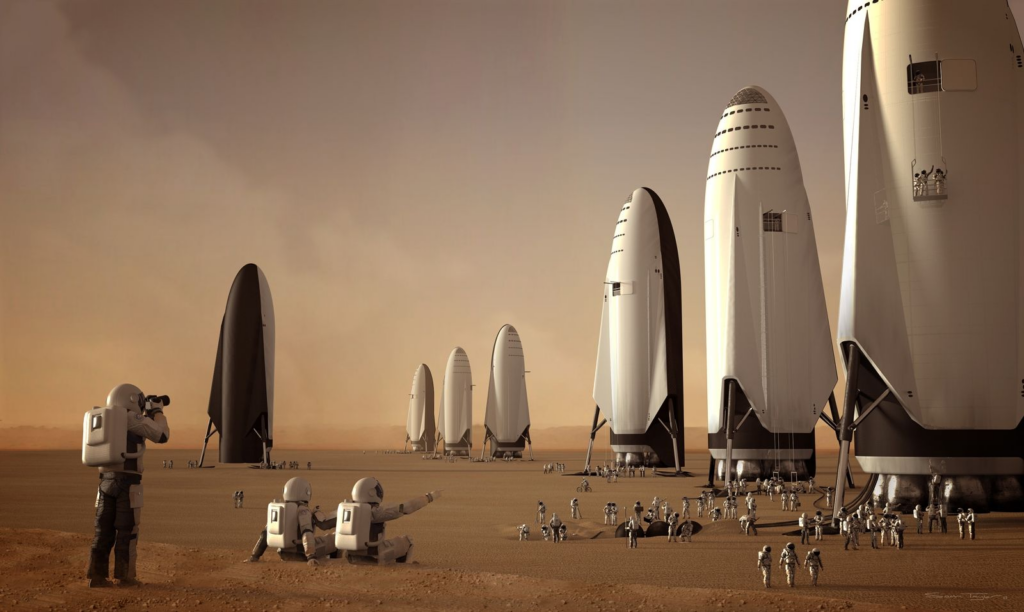
C. Lunar and Deep Space Ambitions: The pinnacle of future luxury travel involves voyages beyond Earth’s orbit. Plans for lunar flybys and eventually “lunar glamping” are already on the drawing boards of visionary aerospace firms. This represents the “Ultra-High-Net-Worth” segment of the future, where the destination is no longer just a view of Earth, but the exploration of another celestial body entirely.
The Titans of the New Space Race
The democratization of space is being driven by three primary visionary entities, each with a radically different approach to the luxury experience.
- A. SpaceX (The Disrupter): Founded by Elon Musk, SpaceX is the powerhouse of the industry. By developing reusable rocket technology—specifically the Falcon 9 and the massive Starship—SpaceX has slashed the cost of reaching orbit. Their focus is on “Long-Duration Missions.” SpaceX doesn’t just want to give you a view; they want to give you a destination, whether it’s the ISS or a private space station.
- B. Blue Origin (The Vertical Experience): Jeff Bezos’s venture focuses on the New Shepard rocket. Their approach is one of “Elegant Simplicity.” A vertical takeoff, a serene capsule with the largest windows ever flown in space, and a gentle parachute landing in the desert. It is designed for those who want the prestige of being an astronaut without the month-long training regimen.
- C. Virgin Galactic (The Spaceplane Aesthetic): Richard Branson’s company offers a “Jet-Set” experience. Using a dual-fuselage carrier aircraft and a rocket-powered spaceplane (VSS Unity), Virgin Galactic provides a more “aviator-style” journey. The experience begins at Spaceport America, a luxury facility designed to make the pre-flight training feel like a stay at a five-star resort.
Life in Zero-G: The Luxury Guest Experience
When you pay upwards of $450,000 for a few minutes or $50 million for a few days, the “amenities” must be out of this world. The luxury space experience is being curated with the same attention to detail as a superyacht or a private island.
A. Gourmet Cosmic Dining: Traditional astronaut food—dehydrated powders and pastes—is being replaced. Luxury space companies are collaborating with Michelin-starred chefs to create menus that can be enjoyed in microgravity. The challenge is immense; without gravity, fluid dynamics change, and our sense of taste is actually duller. Chefs are experimenting with bold, umami-rich flavors and specialized containers to ensure that a “space dinner” is a culinary event.
B. Bespoke Spacesuits: The bulky, Michelin-man suits of the Apollo era are gone. Modern private spacesuits are sleek, tailor-made, and designed for both safety and “Instagrammable” aesthetics. Virgin Galactic’s partnership with Under Armour and SpaceX’s in-house tuxedo-style suits prioritize mobility and comfort, ensuring the traveler looks the part of a futuristic pioneer.
C. The View as the Ultimate Amenity: In luxury real estate, it’s all about the view. In space, the view is everything. Designers are prioritizing massive, multi-layered, reinforced windows. The “Cupola” on the ISS is the most popular spot for a reason, and private space stations like those planned by Axiom Space will feature even larger panoramic observatories, allowing travelers to spend hours gazing at the “Blue Marble.”
D. Wellness and Preparation: The “Space Spa” is the next frontier. Before flight, passengers undergo centrifuge training, zero-G parabolic flights (on “Vomit Comet” aircraft), and psychological briefing. Post-flight, luxury recovery retreats help the body readapt to Earth’s gravity, offering specialized massages and nutritional plans to combat the physical toll of spaceflight.
The Rise of Private Space Stations: Orbital Hotels
The International Space Station (ISS) is aging and was never intended for tourism. The next decade will see the launch of “Commercial Destinations”—essentially, luxury hotels in orbit.
- Axiom Space: They are currently building modules that will initially attach to the ISS and eventually detach to become the world’s first free-flying commercial space station. The interiors are being designed by renowned designer Philippe Starck, featuring padded walls with LEDs that change color based on the time of day, and high-speed Wi-Fi to allow for “live-streaming” from orbit.
- Orbital Reef: A joint venture between Blue Origin and Sierra Space, envisioned as a “mixed-use business park” in space. It will serve researchers, filmmakers, and, most importantly, tourists. It aims to provide the infrastructure for a permanent human presence in Low Earth Orbit (LEO).
The Challenges: Safety, Ethics, and the Environment
While the glamour of space tourism is undeniable, it is not without its dark side. As the industry scales, it must address three critical hurdles.
A. The Safety Paradox: Space is hard, and it is inherently dangerous. A single loose bolt or a microscopic piece of space debris traveling at orbital speeds can be catastrophic. The industry operates on “Informed Consent,” meaning travelers acknowledge that they are taking a life-threatening risk. Maintaining a perfect safety record is the only way for the industry to achieve long-term viability.
B. Environmental Footprint: Launching rockets is a carbon-intensive process. While companies like Blue Origin use liquid hydrogen and liquid oxygen (which produces water vapor as exhaust), others use kerosene-based fuels that release soot and CO2 into the upper atmosphere. As the frequency of launches increases, the industry will face intense scrutiny regarding its contribution to climate change and the growing problem of space debris (Kessler Syndrome).
C. The Ethics of “Billionaire Playgrounds”: Critics argue that the billions spent on space tourism should be directed toward solving Earth-bound problems like poverty or climate change. Proponents, however, argue that the technology developed for space (water purification, solar energy, lightweight materials) eventually benefits all of humanity. Moreover, the “Overview Effect” may create a new class of wealthy philanthropists more dedicated to environmental preservation.
Investing in the Orbital Age
For the savvy investor, space tourism is just the tip of the iceberg. The “Space Economy” is projected to be worth over $1 trillion by 2040. This growth is driven by:
- Satellite Infrastructure: High-speed global internet (Starlink).
- Asteroid Mining: The potential for trillions of dollars worth of rare earth metals.
- Point-to-Point Rocket Travel: Using rockets to travel from London to Sydney in less than an hour.
Investors are no longer just looking at aerospace companies, but at the entire supply chain—from specialized insurance providers to materials science firms and space-focused biotech companies.
One Small Step for the Elite, One Giant Leap for Travel
Space tourism is currently in its “barnstorming” phase—reminiscent of the early days of aviation when only the daring and the wealthy took to the skies. However, technology has a way of trickling down. Just as the trans-Atlantic flight transitioned from a luxury for the few to a commodity for the many, space travel will eventually become more accessible.
For now, it remains the ultimate status symbol. It is the only travel experience that truly changes a person’s perspective on their place in the universe. We are no longer a species confined to the ground; we are becoming a multi-planetary civilization. The “Final Frontier” is no longer just for scientists; it is open for check-in. The stars are waiting, and for those with the means and the courage, the journey of a lifetime is just a countdown away.