The horizon of computational power is shifting. For decades, we have relied on classical computers—the silicon-based machines that power everything from your smartphone to global banking systems. These devices operate on bits, binary units of information that are either a 0 or a 1. However, we are reaching the physical limits of silicon. As transistors become smaller, approaching the size of single atoms, classical physics begins to falter, and the strange, counterintuitive world of quantum mechanics takes over.
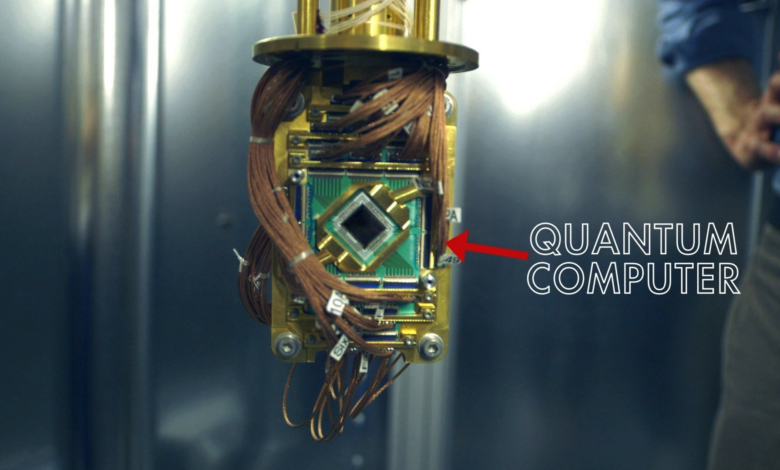
Enter Quantum Computing. This is not merely a faster version of the computer you own today; it is a fundamental reimagining of how information is processed. By harnessing the principles of quantum physics, these machines can solve problems that would take today’s most powerful supercomputers thousands, or even millions, of years to crack. The transition from classical to quantum is akin to moving from the abacus to the modern digital age.
As we stand on the precipice of this “Quantum Leap,” the implications for your daily life are profound. From the medicines you take and the materials used in your car to the security of your bank account and the efficiency of the power grid, quantum computing is set to rewrite the rules of the modern world. This comprehensive guide explores the mechanics, the applications, and the societal shifts that will define the quantum era.
Understanding the Quantum Difference: Beyond Bits
To appreciate how quantum computing will change your life, you must first understand why it is so fundamentally different from what we use now.
A. Bits vs. Qubits: A classical computer uses bits. Think of a bit as a light switch that is either “On” (1) or “Off” (0). A quantum computer uses qubits (quantum bits). Due to a phenomenon called superposition, a qubit can exist in a state of 0, 1, or both simultaneously. This allows a quantum computer to explore a vast number of possibilities at once.
B. Entanglement: This is what Albert Einstein famously called “spooky action at a distance.” When qubits become entangled, the state of one qubit instantly correlates with the state of another, regardless of the distance between them. This interconnectedness allows quantum computers to process complex data sets with a level of synchronization that classical systems can never achieve.
C. Quantum Tunneling: This allows particles to pass through barriers that would be impenetrable in classical physics. In computing, this means quantum processors can find solutions to optimization problems by “tunneling” through the energy barriers of incorrect answers to find the most efficient path.
Revolutionizing Healthcare: Personalized Medicine and Drug Discovery
Perhaps the most immediate and life-changing impact of quantum computing will be felt in the medical field. Currently, bringing a new drug to market takes over a decade and billions of dollars, largely because simulating how a molecule interacts with the human body is a task too complex for classical computers.
A. Molecular Simulation: Nature is quantum. Molecules are held together by quantum bonds. Classical computers struggle to simulate even simple molecules because the number of variables grows exponentially. Quantum computers, however, speak the “language of nature.” They can simulate the exact behavior of atoms and subatomic particles. This will allow scientists to discover new drugs for cancer, Alzheimer’s, and Parkinson’s by virtually testing millions of compounds in hours rather than years.
B. Personalized Genomic Medicine: Every person’s genetic makeup is unique. Quantum computing will enable the rapid sequencing and analysis of individual genomes. Instead of a “one-size-fits-all” approach to healthcare, doctors will be able to prescribe treatments specifically tailored to your DNA, maximizing efficacy and eliminating adverse side effects.
C. Protein Folding: Understanding how proteins fold is the key to understanding many diseases. Misfolded proteins are the culprits behind many neurological conditions. Quantum algorithms can calculate the folding patterns of proteins with high precision, unlocking new pathways for cures that were previously deemed impossible.
The Cybersecurity Paradox: Threat and Protection
One of the most discussed impacts of quantum computing is its ability to break modern encryption. This is a “double-edged sword” that will force a global overhaul of digital security.
A. Breaking RSA Encryption: Most of the world’s secure data—from your private emails to national defense secrets—is protected by RSA encryption. This method relies on the difficulty of factoring large prime numbers. A sufficiently powerful quantum computer could use Shor’s Algorithm to crack this encryption in minutes.
B. The Rise of Post-Quantum Cryptography (PQC): To counter the quantum threat, mathematicians are currently developing “Quantum-Resistant” algorithms. These are new encryption standards designed to be secure even against quantum attacks. In the coming years, every software system on the planet will need to be updated to these new standards.
C. Quantum Key Distribution (QKD): Quantum technology also offers a new way to communicate with absolute security. Using entangled photons, QKD allows two parties to share a secret key. Because of the laws of quantum mechanics, any attempt by a hacker to intercept or observe the key would instantly change its state, alerting the users to the breach. It is literally “unhackable” communication.
Combating Climate Change: Energy and Sustainability
Quantum computing could be our greatest weapon in the fight against global warming. By solving optimization and material science problems, we can create a much greener planet.
A. Super-Efficient Batteries: One of the biggest hurdles for electric vehicles and renewable energy is energy storage. Current lithium-ion batteries have limits. Quantum computing can help us discover new materials for batteries that are 10 times denser, faster to charge, and last significantly longer.
B. Carbon Capture Technology: To reverse climate change, we must remove CO2 from the atmosphere. Quantum simulations are being used to find new catalysts that can capture carbon more efficiently and at a lower cost than current methods. This could turn carbon capture from a niche experiment into a global industrial standard.
C. The Haber-Bosch Process Transformation: Around 2% of the world’s energy is spent creating ammonia for fertilizer. This process is highly energy-intensive and releases massive amounts of CO2. Bacteria in the roots of plants perform this same task at room temperature using a specific enzyme. Quantum computers are being used to simulate this enzyme, which could lead to a revolution in “green” fertilizer, drastically reducing global energy consumption.
Optimizing Global Systems: Finance and Logistics
Our world is incredibly complex. From the path a delivery truck takes to the fluctuating prices of the stock market, we are constantly trying to optimize systems with millions of moving parts.
A. Financial Modeling and Risk Assessment: In the world of high-finance, even a 0.1% edge is worth billions. Quantum computers can perform Monte Carlo simulations—used to predict market volatility and assess risk—far more accurately than classical systems. This will lead to more stable markets and more efficient retirement portfolios for everyday investors.
B. Logistics and Supply Chain: The “Traveling Salesperson Problem” is a classic math puzzle: what is the most efficient route between multiple cities? As the number of cities increases, classical computers fail to find the absolute best route. Quantum computers can optimize global supply chains, reducing fuel consumption, lowering shipping costs, and ensuring that products reach your door faster.
C. Traffic Management: Imagine a city where traffic jams don’t exist. Quantum algorithms can optimize the flow of thousands of autonomous vehicles in real-time, adjusting signals and routes to prevent congestion before it even starts.
The Economic Impact: A New Industrial Revolution
The shift to quantum is creating a new economy. Nations and corporations are currently in a “Quantum Space Race,” investing billions to achieve Quantum Supremacy—the point where a quantum computer can perform a task that no classical computer can.
A. Job Market Evolution: While quantum computing will automate some complex analytical tasks, it will create a massive demand for quantum physicists, algorithm developers, and specialized engineers. The “Quantum Workforce” will be the high-paid elite of the 2030s.
B. Democratization through the Cloud: You won’t need to own a quantum computer (which requires temperatures colder than outer space to operate). Companies like IBM, Google, and Microsoft are already offering “Quantum-as-a-Service,” allowing businesses and researchers to access quantum power via the cloud.
Ethical and Philosophical Considerations
With great power comes great responsibility. As we gain the ability to simulate life and break secrets, we must ask:
- Who owns the algorithms? Will quantum power be concentrated in the hands of a few tech giants, or will it be a public good?
- The end of privacy? If a nation-state achieves quantum power before the world migrates to PQC, every secret on Earth could be exposed.
- Simulated Reality: If we can perfectly simulate a molecule, and eventually a cell, how far are we from simulating a conscious mind?
Preparing for the Quantum Era
Quantum computing is no longer a theoretical “what if.” It is an engineering reality that is scaling up every year. While we are still in the “noisy” era of quantum (where machines make many errors), the trajectory is clear. In the next decade, the “quantum advantage” will begin to touch almost every aspect of your life.
You will live longer due to quantum-designed medicines. Your commute will be shorter due to quantum-optimized traffic. Your energy will be cleaner due to quantum-simulated materials. While the transition will be disruptive—especially in the realm of cybersecurity—it represents one of the most exciting chapters in human history. We are finally moving from the age of bits to the age of qubits, and the possibilities are limited only by the laws of physics themselves.
Would you like me to generate a specific roadmap of how certain industries (like banking or automotive) should prepare for the quantum transition?