
The world of investment is no longer defined by steady growth and predictable dividends from established blue-chip giants. We have entered an era of “Creative Destruction,” a term popularized by economist Joseph Schumpeter, where innovative breakthroughs relentlessly dismantle old industries to make way for the new. To achieve extraordinary returns in today’s market, investors must look beyond the present horizon and identify the disruptive ideas that will define the next decade.
Investing in disruption is not about chasing trends; it is about recognizing fundamental shifts in how humanity produces, consumes, and interacts. From the decentralization of finance to the biological revolution of gene editing, these ideas possess the power to reshape the global economy. However, high reward comes with high risk. Navigating this landscape requires a sophisticated understanding of emerging technologies, a long-term psychological fortitude, and a strategic approach to portfolio construction.
This comprehensive guide serves as a masterclass for the modern investor. We will explore the core sectors currently experiencing radical transformation, the methodologies for identifying truly disruptive companies, and the risk management frameworks necessary to protect your capital while pursuing exponential growth. This is your roadmap to investing in the future, today.
The Architecture of Disruption: Identifying the Catalysts
Disruption occurs when a new technology or business model makes an existing product or service significantly more accessible, affordable, or efficient. It often starts in a niche market, overlooked by incumbents, before rapidly scaling to consume the mainstream. To find these opportunities, one must look at the convergence of multiple technological “S-curves.”
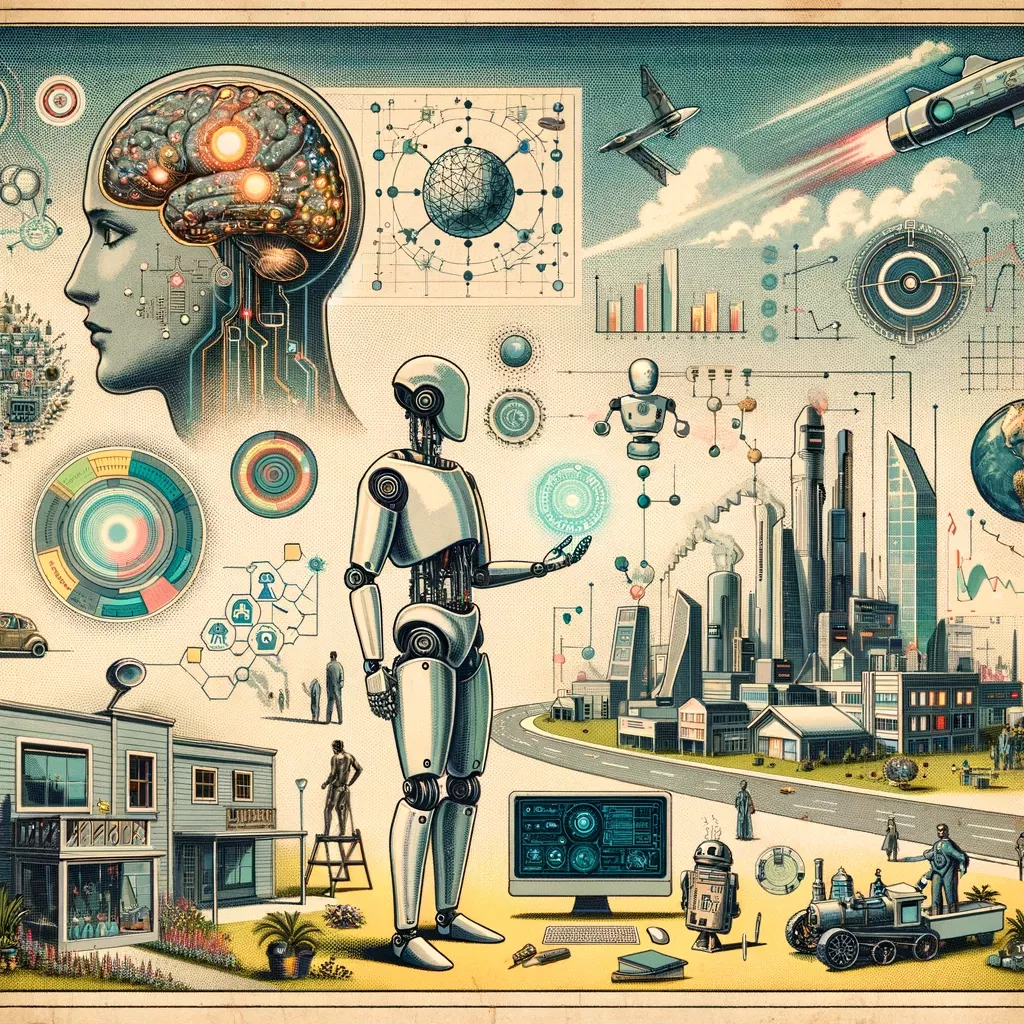
A. Artificial Intelligence and the Era of Autonomy: AI is the ultimate general-purpose technology. Much like electricity in the 20th century, AI is becoming a foundational layer for every industry. We are moving from “Passive AI” (recommendation engines) to “Active Autonomy” (self-driving fleets, automated factories, and AI-driven scientific discovery).
B. The Genomic Revolution: The ability to “program” biological systems is perhaps the most profound shift in human history. Technologies like CRISPR-Cas9 are transitioning from the lab to the clinic, offering potential cures for previously untreatable genetic diseases. This is turning healthcare from a “reactive” system of managing symptoms into a “proactive” system of genetic precision.
C. Energy Transition and Storage: The global shift toward a carbon-neutral economy is driving a massive overhaul of our energy infrastructure. The disruption lies not just in renewable generation (solar and wind), but in the storage and distribution layers. Advanced battery chemistry and “Smart Grids” are the enablers of this multi-trillion-dollar transition.
D. The Decentralized Web (Web3): Beyond the volatility of cryptocurrencies lies the fundamental innovation of blockchain: trustless, decentralized verification. This technology is disrupting traditional finance (DeFi), digital ownership (NFTs), and even the governance of online communities, shifting power from centralized platforms back to individual users.
Deep Dive: The Core Sectors of Future Growth

To build a robust “disruption portfolio,” an investor must understand the specific dynamics of the sectors undergoing the most radical change.
I. Artificial Intelligence: The Intelligence Age
AI is no longer just a buzzword; it is a productivity multiplier. The disruption is happening across three distinct layers:
- The Hardware Layer: The massive computational power required for AI training has created a “Compute Gold Rush.” Companies designing GPUs, TPUs, and specialized AI chips are the “pick and shovel” providers of this era.
- The Foundation Model Layer: Large Language Models (LLMs) and generative AI are becoming the operating systems for creative and analytical work.
- The Application Layer: This is where the most value will likely be captured long-term—companies integrating AI into specific workflows, such as drug discovery, legal research, and autonomous logistics.
II. Fintech 2.0: The End of Legacy Banking
Traditional banks are burdened by physical infrastructure and aging COBOL-based software. Disruptive Fintech companies are attacking every margin of the legacy system:
- A. Digital Wallets and Super-Apps: Platforms that combine banking, investing, and shopping into a single mobile interface are capturing the younger demographic and unbanked populations globally.
- B. Peer-to-Peer (P2P) Lending: Removing the middleman from credit markets allows for more competitive rates for both borrowers and lenders.
- C. Programmable Money: Stablecoins and Central Bank Digital Currencies (CBDCs) are streamlining cross-border payments, reducing settlement times from days to seconds.
III. The Space Economy: The Final Frontier for Investors
The cost of launching payloads into orbit has dropped by over 90% in the last decade, primarily due to reusable rocket technology. This “Launch Disruption” has opened up new commercial possibilities:
- Satellite Constellations: Providing high-speed internet to every corner of the planet.
- Earth Observation: Real-time data for agriculture, climate monitoring, and global logistics.
- Off-World Manufacturing: Taking advantage of microgravity for specialized pharmaceutical and fiber-optic production.
Methodology: How to Spot a Disruptor
Not every “cool” startup is a disruptor. Many are simply “incrementalists” disguised as innovators. To filter the noise, professional investors use a specific set of criteria.
A. The 10x Improvement Rule: A true disruptor doesn’t just offer a 10% improvement; it offers a 10x improvement in cost, speed, or quality. If a product isn’t orders of magnitude better than the incumbent, consumers won’t switch, and the “incumbency advantage” will prevail.
B. Total Addressable Market (TAM) Expansion: Disruptive ideas often create new markets rather than just stealing share from old ones. When Uber launched, it didn’t just compete with taxis; it expanded the market for on-demand transportation to people who never used taxis before.
C. Founder-Product Fit: In the early stages of disruption, the vision of the founder is paramount. Look for founders who possess a “maniacal focus” and deep technical expertise in their domain. They must be capable of navigating the “trough of disillusionment” when the initial hype fades.
D. The Network Effect and Data Moats: Does the product get better as more people use it? Does the company accumulate data that makes it harder for competitors to catch up? These “moats” are what protect a disruptive company’s margins once they reach scale.
Managing Risk in a High-Volatility Portfolio
Investing in disruption is inherently volatile. Stocks in these sectors can experience 50% drawdowns even while their underlying business fundamentals remain strong. Survival requires a disciplined risk management strategy.
- Size Your Positions Correctly: Never bet the “whole farm” on a single disruptive idea. A common approach is a “Core-Satellite” strategy: keep 80% of your wealth in diversified, low-cost index funds, and allocate 20% to high-conviction disruptive bets.
- The 5-10 Year Horizon: Disruption takes time. Tesla, Amazon, and Netflix all spent years as “failures” in the eyes of the mainstream media before their technological S-curves reached the inflection point. You must have “permanent capital”—money you do not need for at least five to ten years.
- Expect the “Gartner Hype Cycle”: Understand that every new technology goes through a cycle: the “Innovation Trigger,” the “Peak of Inflated Expectations,” the “Trough of Disillusionment,” and finally, the “Slope of Enlightenment.” The best time to invest is often during the “Trough,” when the hype has died down but the real work is being done.
The Psychological Game: Staying Rational in an Irrational Market
The greatest challenge in future-oriented investing isn’t technical; it’s psychological. A. Avoid the Echo Chamber: Social media can create feedback loops that lead to irrational exuberance or panic. Do your own primary research. Read whitepapers, watch technical demonstrations, and ignore the daily “noise” of the stock ticker. B. Embrace “Optionality”: Recognize that many disruptive bets will fail. In a portfolio of ten disruptive companies, six might go to zero, three might provide modest returns, and one might become a 100x winner. The 100x winner pays for all the failures and generates the massive outperformance. This is known as “Power Law” investing. C. Stay Humble: Technology changes fast. Be willing to change your mind when the facts change. If a disruptive thesis is proven wrong—perhaps a newer technology leapfrogs the one you invested in—be disciplined enough to cut your losses and move on.
Conclusion: Becoming a Participant in the Future
Investing in tomorrow’s disruptive ideas is more than just a financial strategy; it is a way of participating in the progress of the human race. By allocating capital to the entrepreneurs and technologies that are solving the world’s most complex problems—from climate change to chronic disease—you are helping to accelerate the arrival of the future.
The “Golden Age” of innovation is not behind us; it is just beginning. As the costs of compute, energy, and genetic sequencing continue to plummet, the barrier to entry for world-changing ideas has never been lower. For the patient, disciplined, and forward-thinking investor, the opportunities for wealth creation are unparalleled in history. The future is being written right now. Are you ready to invest in it?