The horizon of technological advancement is shifting at a pace that defies traditional forecasting. As we approach the latter half of the decade, the conversation is moving away from basic digitization toward a world defined by “Hyper-Convergence.” This is a state where the boundaries between biology, digital intelligence, and physical reality dissolve. For businesses, investors, and tech enthusiasts, understanding the landscape beyond 2026 isn’t just about curiosity—it’s about survival in an era where disruption is the only constant.
We are entering a phase where Artificial Intelligence (AI) transitions from a tool we use to an environment we inhabit. Simultaneously, breakthroughs in quantum computing and biotechnology are preparing to solve problems that were previously deemed “computationally impossible.” This article provides a deep dive into the most transformative trends that will define our lives, our economies, and our very identity in the years following 2026.
The Era of Sentient Systems: AI Evolution
By 2027, the “Generative AI” craze will have matured into something far more profound: Agentic AI. Unlike current systems that require constant prompting, these future entities will possess “agency”—the ability to set their own goals, execute complex multi-step workflows, and interact with other AI agents to complete autonomous projects.
A. From Generative to Agentic AI: We will see the rise of Personal AI Operating Systems. These won’t be apps on a phone; they will be persistent digital twins that manage your finances, optimize your health based on real-time biometric data, and negotiate on your behalf in the digital marketplace.
B. The Integration of Neuromorphic Computing: To sustain the massive energy demands of post-2026 AI, hardware will shift toward neuromorphic chips. These are processors designed to mimic the human brain’s neural structure, allowing for AI training and inference at a fraction of the current power consumption. This shift is critical for “Edge AI,” where complex intelligence lives on local devices rather than massive, energy-hungry data centers.
C. The Solve for Hallucinations: Through the integration of Symbolic AI (logic-based) with Neural Networks (pattern-based)—a field known as Neuro-symbolic AI—the reliability of machine intelligence will reach near-perfection. This will allow AI to be trusted in high-stakes environments like autonomous legal adjudication and real-time robotic surgery.
Quantum Supremacy: Beyond Binary Limitations
While 2024 and 2025 focused on experimental quantum stability, the period beyond 2026 will mark the “Quantum Utility” era. We are moving toward Error-Corrected Quantum Computing, which will fundamentally break the encryption and material science barriers of the silicon age.
A. The End of Classical Encryption: The post-2026 landscape faces a “Quantum Apocalypse” (Y2Q) where current RSA encryption becomes obsolete. This will drive a massive global migration to Post-Quantum Cryptography (PQC). Every financial institution and government agency will be forced to rebuild their security stacks on lattice-based cryptography.
B. Molecular Simulation and Drug Discovery: The most immediate impact of quantum utility will be in the pharmaceutical sector. Instead of years of “trial and error” in labs, quantum computers will simulate molecular interactions at the atomic level. We can expect the discovery of highly specific enzymes that can “eat” plastic or the creation of superconductors that work at room temperature, potentially solving the global energy crisis.
C. Optimization of Global Logistics: From air traffic control to global shipping routes, quantum algorithms will solve “traveling salesman” problems in seconds that would take classical supercomputers millennia. This will result in a hyper-efficient global supply chain with near-zero waste.
The Metaverse Reborn: Spatial Computing and XR
The “Metaverse” was overhyped in 2021, but it will be realized after 2026 through the lens of Spatial Computing. This isn’t about escaping into a cartoon world; it’s about overlaying digital intelligence onto the physical world so seamlessly that they become one.
A. The Death of the Smartphone Screen: Wearable displays, evolving from heavy goggles into lightweight AR glasses, will begin to replace smartphones. Interfaces will be controlled by “Neural Gaze”—a combination of eye-tracking and non-invasive Brain-Computer Interfaces (BCI) that detect intent through wrist-worn sensors.
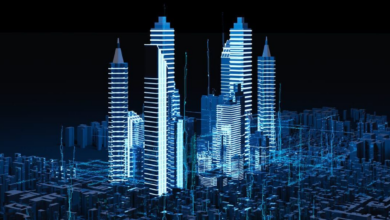
B. Digital Twins of Everything: Urban planning will be revolutionized by persistent digital twins. Every pipe, electrical wire, and traffic light in a city like Singapore or New York will have a real-time digital counterpart. Using AI, city planners can run simulations to see how a new skyscraper or a change in bus routes will affect the entire ecosystem before a single brick is laid.
C. The Industrial Metaverse: In manufacturing, “Remote Presence” will allow specialized technicians to repair complex machinery on the other side of the planet using high-fidelity haptic suits and VR, feeling the tension of a bolt or the heat of an engine from thousands of miles away.
The Bio-Digital Convergence: Programming Life

Perhaps the most controversial and exciting trend is the application of engineering principles to biology. After 2026, Synthetic Biology (SynBio) will transition from research to a trillion-dollar industry.
A. CRISPR 2.0 and Epigenetic Editing: We are moving beyond just cutting DNA. Future gene editing will focus on “Epigenetic Tuning”—turning genes on or off without changing the underlying code. This could lead to cures for age-related decline, metabolic disorders, and even the “programming” of plants to grow in Martian-like soil.
B. Bio-Computing and DNA Data Storage: Silicon is reaching its physical limits. In the post-2026 era, we will see the first commercial DNA Data Storage centers. DNA is the ultimate storage medium; it is incredibly dense and can last for thousands of years. A single gram of DNA can theoretically store 215 petabytes of data.
C. Lab-Grown Everything: From “Cultured Meat” that is indistinguishable from traditional livestock to “Bio-Fabricated” leather and timber, the manufacturing sector will shift from extraction to cultivation. This is a key pillar of the “Circular Bio-Economy” required to meet 2030 climate goals.
Energy Autonomy: Fusion and Solid-State Breakthroughs
Technology is limited by energy. Beyond 2026, the energy sector will undergo a “Hardware Revolution” to support the computing demands of AI and Quantum systems.
A. The Rise of SMRs (Small Modular Reactors): Large-scale nuclear plants are being replaced by SMRs. These are factory-built, portable nuclear reactors that can provide carbon-free energy to a specific data center or a small city. They are safer, cheaper, and can be deployed in months rather than decades.
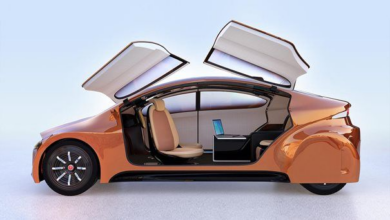
B. Solid-State Battery Dominance: The lithium-ion era is ending. Solid-state batteries, which offer double the energy density and five-minute charging times, will become the standard for electric vehicles (EVs) and eVTOLs (Electric Vertical Take-off and Landing aircraft), finally making “flying taxis” a viable urban transport option.
C. Commercial Nuclear Fusion Milestones: While a “Fusion Grid” might still be decades away, the years following 2026 will see the first sustained, net-energy-gain reactions in commercial pilots. This will trigger a massive influx of capital into fusion startups, signaling the beginning of the end for fossil fuels.
The Future of Human Capital: Automation and the New Economy
The social contract will be rewritten. As AI and Robotics take over both manual and cognitive labor, the focus of human society will shift.
A. The Universal Basic Services Debate: As automation reaches a tipping point, the conversation will move from Universal Basic Income (UBI) to Universal Basic Services (UBS)—guaranteed access to AI-driven healthcare, education, and transport as a right.
B. The “Human Premium” in Art and Trade: In a world flooded with perfect AI-generated content, a new market will emerge for “Human-Certified” products. Hand-made furniture, human-written philosophy, and live performances will command a massive price premium, similar to how we value organic food today.
C. Education via Neural Loading: While we won’t be “downloading Kung Fu” into our brains by 2027, the integration of AI tutors with VR will allow for “Accelerated Learning.” A student could spend a week in a Roman forum to learn history or use an AI-guided VR lab to learn chemistry, reducing the time to gain a degree by 50%.
Cybersecurity in a Zero-Trust World
In the post-2026 era, “Identity” is the most vulnerable asset. As Deepfakes become perfect, we will enter a period of Identity Paradox.
A. Biometric Blockchain Sovereignty: To prove you are human, individuals will use “Self-Sovereign Identity” (SSI) anchored on a blockchain. Your biometric “hash” will be your digital passport, allowing you to prove your identity without sharing your personal data.
B. AI-on-AI Warfare: Cybersecurity will no longer be humans vs. hackers. It will be Defensive AI vs. Offensive AI. Security systems will constantly simulate millions of “War Games” per second to find and patch vulnerabilities before a human even knows they exist.
C. The Decentralized Web (Web3) Maturity: Beyond 2026, the “Decentralized Web” will finally move past crypto-speculation. It will become the infrastructure for a “De-platformed” internet, where users own their data and move it seamlessly between different spatial computing environments without being locked into a single “Big Tech” ecosystem.
Preparing for the Great Convergence
The years beyond 2026 will not be defined by a single gadget or app, but by the convergence of these disparate technologies into a single, intelligent reality. We are moving from being “users” of technology to being “participants” in a technology-driven biological and digital ecosystem.
The risks are significant—privacy erosion, algorithmic bias, and the disruption of traditional labor. However, the rewards are civilizational: the cure for incurable diseases, the end of energy scarcity, and the expansion of human consciousness through spatial and neural interfaces. To thrive in this future, one must maintain “Radical Adaptability.” The future belongs to those who view these trends not as threats to be feared, but as tools to be mastered.