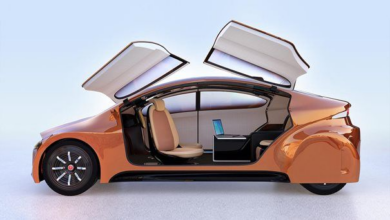
The global industrial landscape is currently standing at a crossroads. We are no longer merely discussing the incremental improvements of the past; we are witnessing a tectonic shift driven by a convergence of advanced technologies that are fundamentally rewriting the rules of production, logistics, and value creation. This is the era of Industry 4.0 and beyond—a period where the physical and digital worlds merge to create “smart” systems capable of autonomous decision-making and unprecedented efficiency.
For businesses, investors, and policymakers, understanding these “Next-Gen” technologies is no longer an elective study—it is a survival mandate. The integration of Artificial Intelligence (AI), the Internet of Things (IoT), advanced robotics, and sustainable energy solutions is creating a competitive chasm. On one side are the legacy organizations struggling with aging infrastructure and manual processes; on the other are the “lightweight” digital giants and agile manufacturers who use data as their primary fuel.
In this comprehensive analysis, we will explore the core pillars of this industrial transformation. We will examine how specific technologies are not just “improving” industries but are completely dismantling old business models to build something more resilient, personalized, and sustainable. From the micro-level of quantum computing to the macro-level of global supply chain automation, here is how the world is being reshaped.
The Architecture of Intelligence: AI and Machine Learning
At the heart of the next-gen revolution lies Artificial Intelligence. While AI has been a buzzword for decades, its application in heavy industry, manufacturing, and logistics has reached a tipping point due to the massive availability of data and specialized hardware.
A. Predictive Maintenance and Zero Downtime: Historically, factories operated on a “break-fix” model or a scheduled maintenance plan that often led to wasted resources. Today, AI-driven sensors monitor the vibration, heat, and sound of machinery in real-time. By analyzing this data, machine learning algorithms can predict a component failure weeks before it happens. This transition to predictive maintenance is saving global industries billions of dollars by eliminating unplanned downtime.
B. Generative Design in Engineering: Engineers are no longer limited by human imagination. Generative design uses AI to explore thousands of iterations of a product design based on specific constraints (like weight, strength, or material cost). This results in organic, highly optimized structures that use less material while maintaining superior structural integrity—something particularly revolutionary in the aerospace and automotive sectors.
C. Cognitive Supply Chains: Global logistics are notoriously volatile. AI helps companies navigate this by processing millions of data points—from weather patterns and port congestion to geopolitical shifts. A cognitive supply chain doesn’t just react to a delay; it anticipates it and automatically reroutes shipments or adjusts production schedules without human intervention.
Connectivity and the Industrial Internet of Things (IIoT)
If AI is the brain, then the Industrial Internet of Things (IIoT) is the nervous system. The proliferation of 5G connectivity has allowed for the massive deployment of sensors across every square inch of the industrial floor.
A. The Rise of Digital Twins: Perhaps the most significant development in IIoT is the “Digital Twin.” This is a virtual replica of a physical asset, process, or system. By feeding real-time data from the physical object into its digital counterpart, companies can run “what-if” simulations. For instance, a city can create a digital twin of its power grid to simulate the impact of a massive storm, or a manufacturer can test a new production speed in the digital world before touching a single machine on the floor.
B. Edge Computing for Real-Time Response: In high-speed industrial environments, waiting for data to travel to a centralized cloud server and back is too slow (latency). Next-gen tech is moving processing power to the “edge”—directly onto the machines or local gateways. This allows for millisecond response times, which is critical for safety systems and precision robotics.
C. Smart Energy Management: IIoT is the backbone of the “Smart Grid.” By monitoring energy consumption at every point of the factory, systems can automatically shift heavy power tasks to off-peak hours or integrate renewable energy sources like on-site solar and wind when they are most productive.
Advanced Robotics and Human-Robot Collaboration
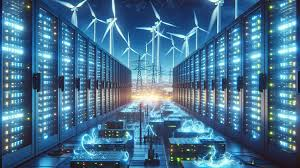
Robots are no longer confined to cages. The next generation of robotics is characterized by “Cobots” (Collaborative Robots) and autonomous mobile units that work alongside humans.
A. Cobots and Enhanced Safety: Traditional industrial robots were dangerous to be around. Modern cobots are equipped with advanced computer vision and haptic sensors that allow them to “feel” a human’s presence. They handle the “3D” tasks—Dull, Dirty, and Dangerous—allowing human workers to focus on quality control and complex problem-solving.
B. Swarm Robotics and Warehouse Automation: Inspired by nature, swarm robotics involves many small robots working together to achieve a goal. In logistics giants like Amazon or Alibaba, swarms of autonomous mobile robots (AMRs) navigate warehouses with perfect precision, picking and sorting items faster than any human team could.
C. Soft Robotics in Delicate Manufacturing: Next-gen robotics also includes “soft robotics”—machines made of compliant materials that can handle delicate items like fresh produce or fragile electronics without damage, expanding automation into industries previously thought to require a “human touch.”
Sustainable Tech: The Green Industrial Revolution
Global industry is under immense pressure to decarbonize. “Green-tech” is no longer a corporate social responsibility (CSR) checkbox; it is a core business strategy driven by carbon taxes, consumer demand, and resource scarcity.
A. The Hydrogen Economy: While batteries are great for light vehicles, heavy industries like steel and shipping require higher energy density. Green hydrogen, produced through electrolysis powered by renewables, is emerging as the “holy grail” for decarbonizing heavy industry.
B. Circular Economy Technologies: Next-gen manufacturing is moving away from the “take-make-waste” model. New technologies in chemical recycling and automated sorting are allowing companies to treat waste as a raw material. 3D printing (Additive Manufacturing) plays a massive role here, as it only uses the material needed for the part, drastically reducing scrap.
C. Carbon Capture and Storage (CCS): For industries that cannot easily switch to renewables, CCS technologies are being integrated directly into factory smokestacks. This technology captures $CO_2$ before it enters the atmosphere and either pumps it underground or converts it into useful products like synthetic fuels or building materials.
The Future Horizon: Quantum and Biotech
Looking further ahead, two fields are poised to disrupt the disruptors: Quantum Computing and Industrial Biotechnology.
A. Quantum Material Science: Quantum computers can simulate molecular interactions that are impossible for classical computers. This will lead to the discovery of “super-materials”—batteries that charge in seconds, room-temperature superconductors, and ultra-lightweight alloys that could revolutionize transportation.
B. Synthetic Biology in Manufacturing: We are beginning to use “bio-factories”—microbes engineered to “grow” materials like silk, leather, or even plastic-like polymers. This reduces the reliance on petrochemicals and moves manufacturing closer to a biological, self-sustaining process.
Navigating the Transition

The transition to next-gen industrial technology is not a single event but a continuous evolution. The convergence of these technologies—AI, IIoT, Robotics, and Green Energy—is creating a world where production is faster, cleaner, and more responsive to human needs. However, this shift also brings challenges, particularly regarding the workforce. As machines take over routine tasks, the demand for high-level skills in data analysis, systems engineering, and ethical AI oversight will skyrocket.
For the modern enterprise, the path forward is clear: invest in digital infrastructure, embrace the data-driven mindset, and prioritize sustainability. The industries of tomorrow are being built today, and they are being built with code, silicon, and a profound respect for the planet’s limits.