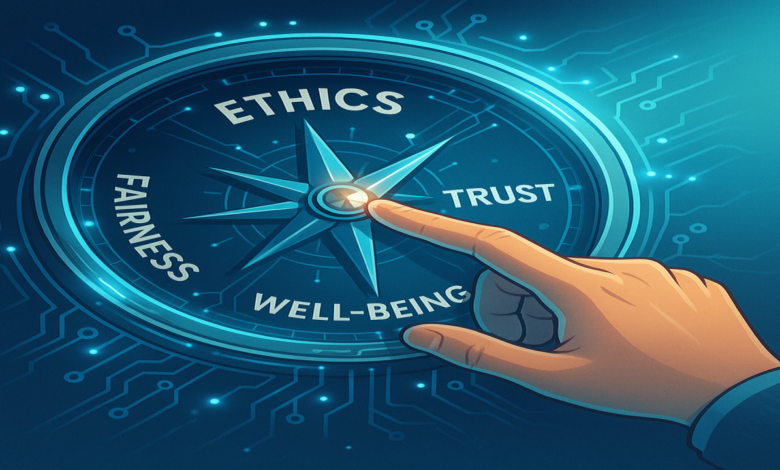
The integration of Artificial Intelligence (AI) into the corporate world is no longer a futuristic concept; it is the current engine driving global industry. However, as algorithms take over decision-making processes—from hiring and credit scoring to medical diagnostics and autonomous logistics—a new and complex challenge has emerged. We have reached the AI Ethics Frontier. This is not merely a technical hurdle or a PR concern; it is a fundamental shift in corporate responsibility that will define the winners and losers of the next decade.
For the modern enterprise, AI ethics represents the bridge between technological capability and social trust. While the potential for increased efficiency and profit is vast, the risks of unchecked algorithmic bias, data privacy violations, and lack of transparency are equally significant. Companies that fail to address these ethical dimensions risk not only massive regulatory fines and legal battles but also the permanent erosion of their brand reputation. This article serves as a comprehensive roadmap for leaders, developers, and stakeholders to master the ethical complexities of the AI era.
The Core Pillars of Ethical AI in Business
To build a sustainable AI strategy, organizations must move beyond vague mission statements and implement concrete ethical frameworks. These pillars serve as the foundation for any responsible AI deployment.
A. Transparency and Explainability: One of the greatest dangers of AI is the “Black Box” effect, where even the creators of an algorithm cannot fully explain how it reached a specific conclusion. Ethical AI requires transparency. Businesses must be able to explain the logic behind AI-driven decisions, especially when those decisions impact human lives, such as loan approvals or insurance premiums.
B. Fairness and Bias Mitigation: AI models are trained on historical data, which often contains human biases. If a hiring AI is trained on data from a period when women were underrepresented in leadership, the AI may learn to penalize female candidates. Actively auditing datasets for bias and implementing “fairness by design” is essential to prevent the automation of discrimination.
C. Accountability and Governance: When an AI system makes a mistake, who is responsible? Establishing clear lines of accountability is a corporate necessity. This includes creating AI oversight committees, appointing Chief AI Ethics Officers, and maintaining “human-in-the-loop” systems where critical decisions are reviewed by people.
D. Data Privacy and Consent: AI thrives on data, but ethical boundaries must protect the individuals behind that data. Organizations must ensure that data collection is consensual, secure, and compliant with global regulations like GDPR and the CCPA. Protecting the “digital twin” of a customer is as important as protecting their physical assets.
The Economic Value of Ethical AI
From a search engine optimization and business growth perspective, ethical AI is not just a cost center—it is a competitive advantage. Consumers are increasingly choosing brands that align with their values.
- Trust as Currency: In a digital economy, trust is the most valuable commodity. Companies that are transparent about their AI usage build deeper loyalty with their customers. This leads to higher retention rates and lower customer acquisition costs.
- Avoiding Regulatory Friction: Governments worldwide are racing to regulate AI. By adopting high ethical standards early, businesses can stay ahead of the curve, avoiding the “scramble for compliance” that often follows new legislation.
- Attracting Top Talent: The brightest minds in AI and data science prefer to work for organizations that prioritize social responsibility. A strong ethical framework is a powerful tool for recruiting and retaining elite technical talent.
Implementing an AI Ethics Roadmap
Mastering this frontier requires a step-by-step approach to organizational change.
A. Identify Potential Risks: Conduct a thorough audit of all existing and planned AI projects. Identify where AI interacts with personal data or makes high-stakes decisions. B. Formulate an Ethics Charter: Create a living document that outlines the company’s ethical principles regarding technology. This should be developed by a cross-functional team, including ethicists, lawyers, engineers, and marketers. C. Invest in Bias-Detection Tools: Use specialized software to scan training data for imbalances and monitor AI performance in real-time to detect “drift” or emerging biases. D. Establish Continuous Education: AI ethics is a fast-moving field. Provide ongoing training for employees at all levels to ensure everyone understands the ethical implications of the tools they use.
The Future of Human-AI Collaboration
The goal of AI ethics is not to stifle innovation, but to ensure that innovation serves humanity. As we move forward, the focus will shift toward Collaborative Intelligence, where the speed of AI is balanced by the empathy and moral judgment of humans.
The companies that thrive in this new frontier will be those that treat ethics not as a constraint, but as a catalyst for better, more robust, and more human-centric technology. By prioritizing transparency, fairness, and accountability today, businesses are securing their place in the ethical economy of tomorrow.
Why Ethics is the New Bottom Line

We are at a pivotal moment in the history of technology. Artificial Intelligence has the power to solve some of our greatest challenges, but only if it is guided by a strong moral compass. For corporations, the “New Frontier” of AI ethics is where technology meets humanity. It is an opportunity to redefine what it means to be a responsible business in the 21st century.
Mastering AI ethics requires courage, transparency, and a long-term vision. It is no longer enough to be the fastest or the most technologically advanced; you must also be the most trustworthy. Start building your ethical AI framework today—your customers, your employees, and your future depend on it.